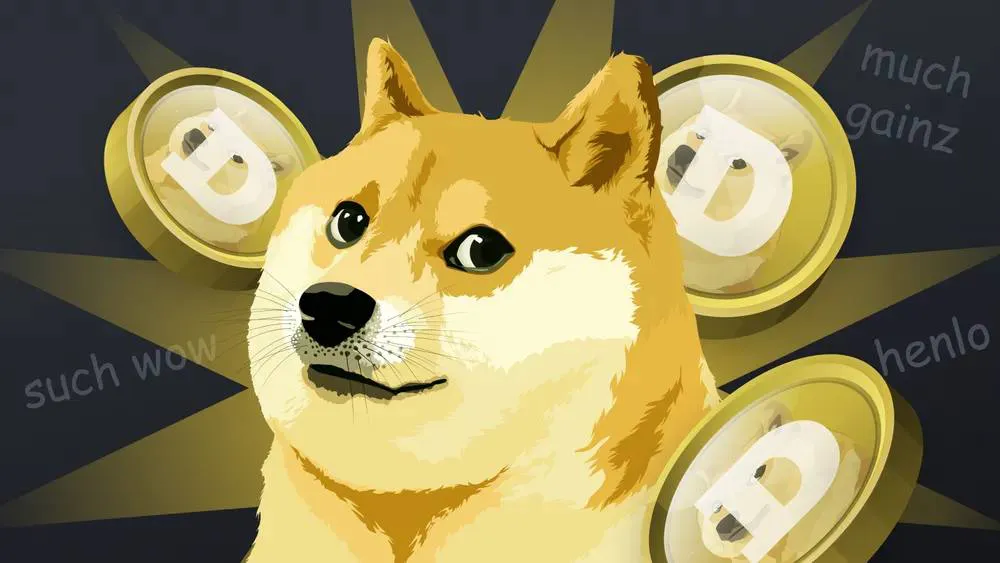

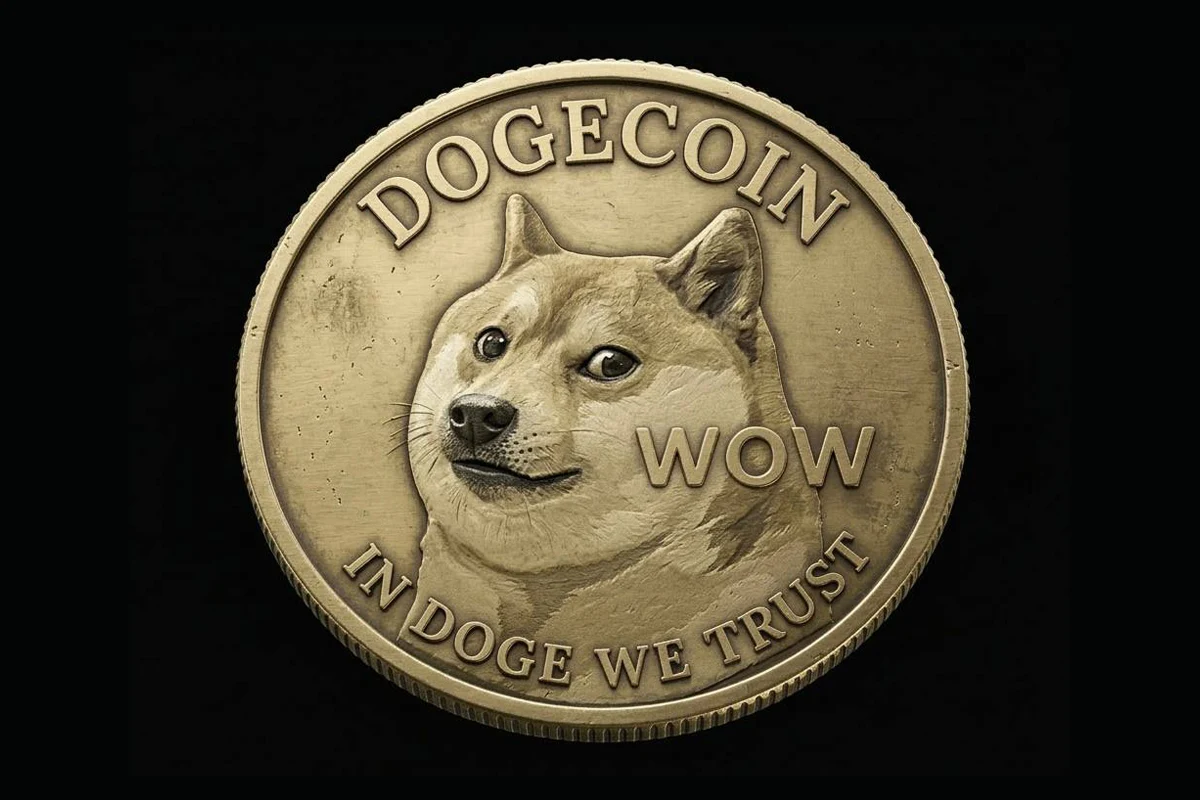
The $90B Memecoin: $DOGE
Before Dogecoin was worth tens of billions of dollars, it was the first true meme on a blockchain.
In 2013, two software engineers Billy Markus and Jackson Palmer were watching the market. Bitcoin was gaining momentum and people believed it could be their saviour. Altcoins started popping up daily with promises about changing the world. So Palmer tweeted that he was investing in “Dogecoin, pretty sure it’s the next big thing,” as a joke.
People took it seriously.
Markus saw the tweet and reached out. Within days they forked Litecoin, swapped in a meme of a shiba inu, and launched Dogecoin in December 2013.
It was not meant to be revolutionary.
It was not meant to be taken seriously.
It was internet humour on the blockchain.
And that was the genius.
Early holders gathered on forums across the internet and built one of the most generous crypto communities ever seen. They tipped each other fractions of DOGE for good posts. They raised 26,000,000 Dogecoins to send the Jamaican bobsled team to the 2014 Winter Olympics. They sponsored a NASCAR driver.
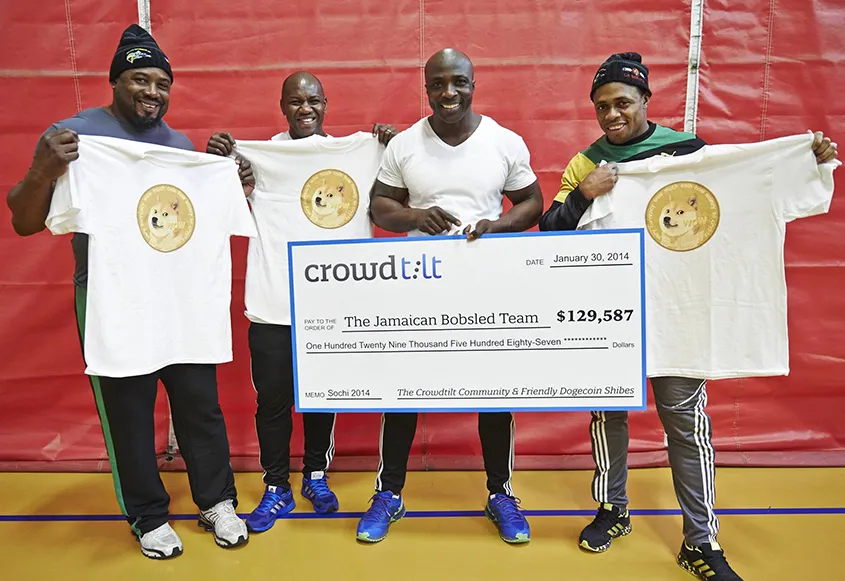
While Bitcoin was serious and ideological, Dogecoin was a little bit of fun.
There was also a structural difference. Unlike Bitcoin, Dogecoin had no supply cap. It inflated forever. Five billion new DOGE are minted each year. That made it unsuitable for “digital gold” narratives, but perfect for tipping and casual use. It felt abundant, not precious.
In the brutal bear market of 2014 to 2016, most altcoins died.
But Dogecoin… lingered.
Simply because people loved both the meme and the community. So by the time crypto mania returned in 2017, Doge was positioned nicely.
Bitcoin ripped from $1,000 to $20,000. Retail flooded in. Every old coin with a ticker got rediscovered.
Dogecoin moved from fractions of a cent to about $0.017 in early 2018. It was still tiny compared to what would come, but this was the first proof that the joke could pump.

Still, it faded like everything else in the 2018 crash. And most people assumed that was the end of it. But they were wrong.
In 2020, something strange happened.
A trend emerged online encouraging users to buy Dogecoin to push it to $1. It was absurd math. It made no sense. But it injected fresh retail attention.
Then came an explosion.
Elon Musk started tweeting about Dogecoin.
At first it looked like random humour. Doge memes. One word tweets. “Dogecoin is the people’s crypto.” But Musk had 50 million followers at the time. So the attention on every tweet triggered vertical price candles.
During this time something shifted psychologically.
Dogecoin was no longer just a memecoin.
It became an internet phenomenon.
Retail traders on Robinhood, fresh from GameStop mania, latched onto it. It was cheap. It felt accessible. People could buy thousands of coins instead of 0.0003 BTC. That illusion of scale is powerful in retail psychology.
And from January 2021 to May 2021, Dogecoin exploded from under one cent to $0.73.
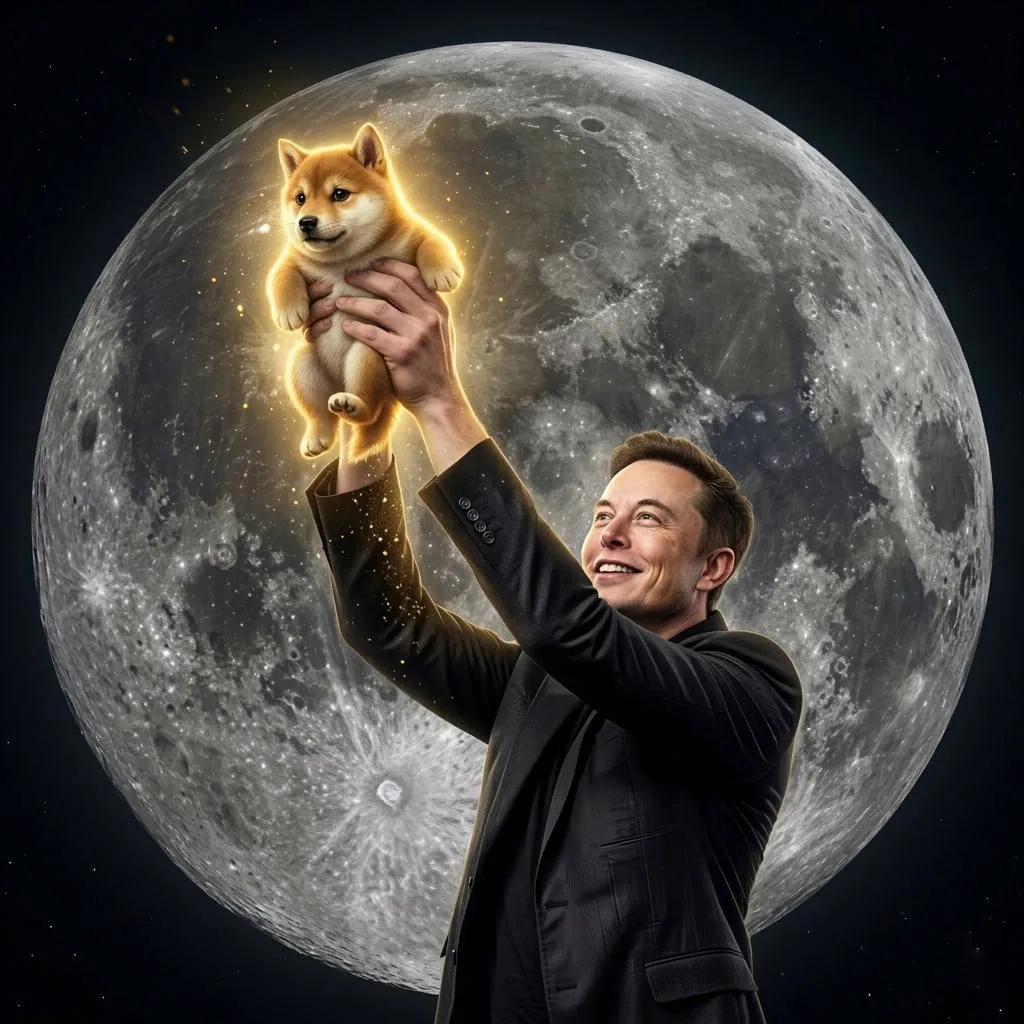
At peak, its market cap briefly touched around $90 billion.
A literal joke coin was worth more than many global corporations.
That peak aligned with Musk hosting Saturday Night Live in May 2021.
Speculation had been building for weeks. The narrative was simple: Musk would mention Dogecoin on national television and send it to $1.
Instead, during the show he jokingly called it “a hustle.”
The price crashed live.
That was the top.
The highest ATH, around $0.73, marked the highest a memecoin had ever reached. And It was driven by coordinated attention, celebrity amplification, stimulus checks, zero percent interest rates, and pandemic boredom. The perfect combination.
It was pure liquidity and narrative compression.
After 2021, Dogecoin retraced over 90 percent at one point.
Yet it did not vanish.

Why?
Three reasons.
First, brand recognition. Dogecoin is the original memecoin. Before PEPE, before WIF, before SHIB, there was DOGE.
Second, exchange integration. It is listed on Binance, Coinbase, and virtually every major platform. The liquidity and attention keeps it alive.
Third, Musk never fully abandoned it. Tesla merchandise briefly accepted DOGE. SpaceX mentioned it. Even sporadic tweets are enough to remind markets that the association still exists.
Dogecoin’s inflation is fixed at 5 billion coins per year. As a percentage of total supply, that inflation rate decreases over time. Early on it was high. Now it sits around 3 to 4 percent annually and continues declining.
That makes it more stable than people assume. It is not hyperinflationary. It is mildly inflationary.
Technically, it is simple. It does not innovate.
Dogecoin’s strength is not engineering.
It is narrative persistence.
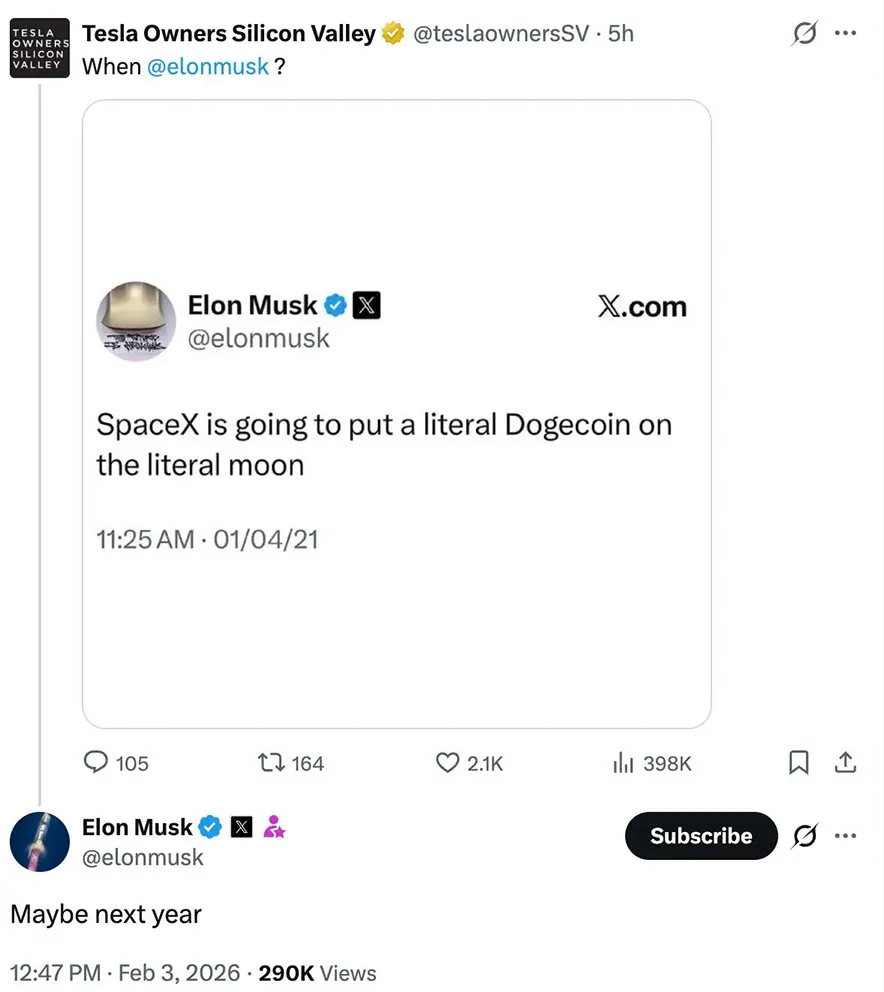
What could trigger another run?
For Dogecoin to reclaim previous highs, several things would likely need to align:
A bull market.
Retail participation returning.
Likely Musk reengaging aggressively.
And finally a new memecoin cycle.
Dogecoin historically performs best when liquidity is loose and speculation is culturally acceptable. It is not a DeFi play. It is not an AI infrastructure bet. It thrives when people want something simple and fun.
It is a thermometer for retail euphoria.
There are three plausible futures.
One: It remains a legacy blue chip memecoin. Not explosive, but permanent. A cultural monument.
Two: Another mania sends it near or past its previous ATH, especially if tied to a larger macro bubble or direct integration into something like X payments infrastructure.
Three: It slowly fades into background relevance as newer meme ecosystems fragment attention across dozens of chains.
But historically, internet icons rarely disappear completely.
Dogecoin is built on a meme from 2010 featuring a Shiba Inu with broken English captions. It survived two full crypto winters, creator abandonment, ridicule, and 90 percent drawdowns.
That resilience is cultural.
And the fact that it is still here more than ten years later may be the most serious thing about it.