

SODAX: Infrastructure for Modern Money
SODAX is one of the more interesting infrastructure projects in DeFi because it is focused on a problem that became obvious only after crypto expanded: fragmentation.
Blockchains gave people real ownership of their assets. For the first time, people could hold value digitally and move it without asking permission from traditional institutions. But ownership alone isn’t enough. If using those assets still requires complexity like bridges, wrapped tokens, gas management, and network switching, then the system is still too difficult for normal people to understand, let alone use.
That is the problem SODAX is trying to solve.
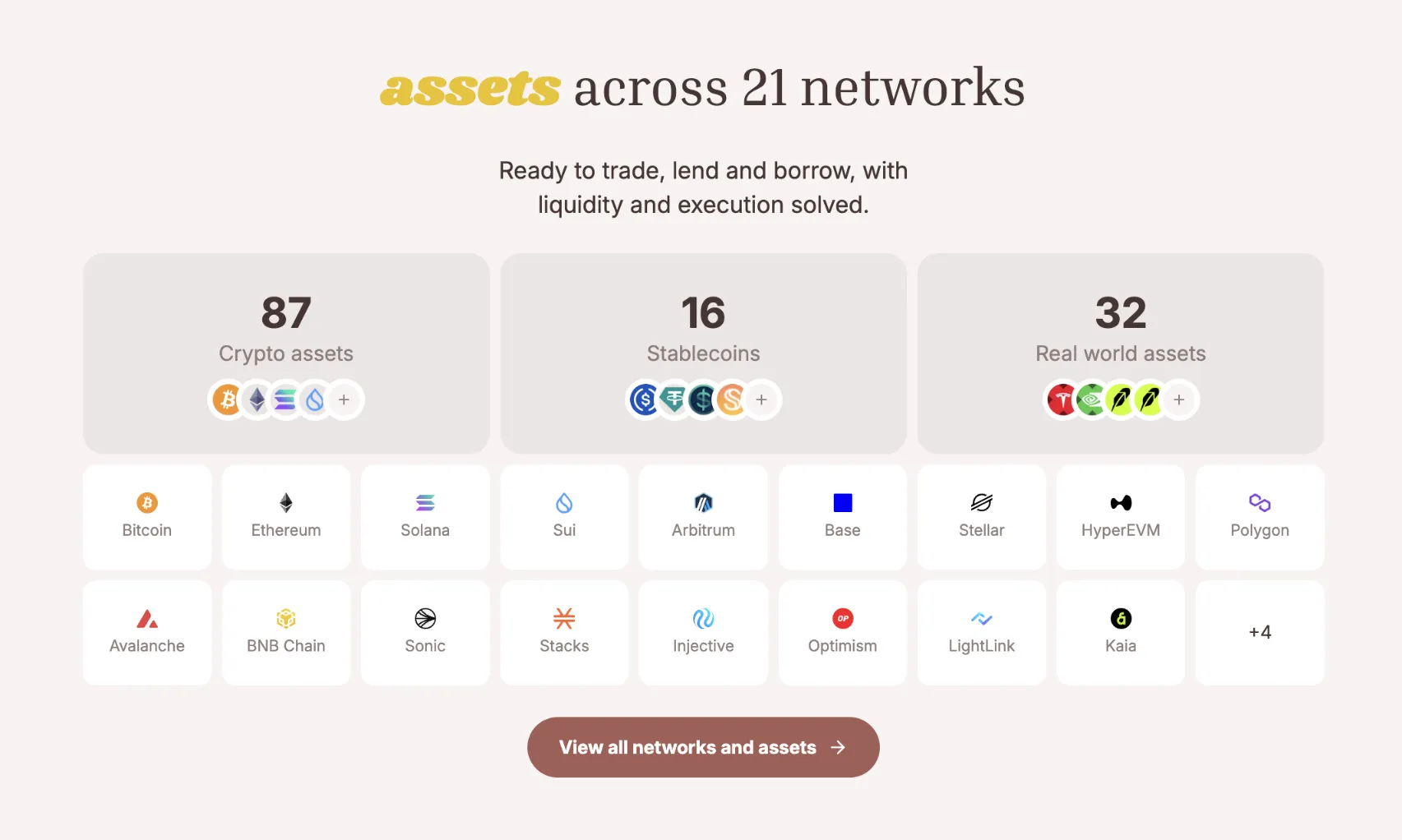
Crypto became multichain, but the user experience hasn’t caught up. Assets are spread across different networks. Liquidity is split between isolated decentralised pools. Builders are forced to stick to one chain or deploy across multiple chains, stitch together bridges, manage it all, and accept that their users will have to deal with the complexity underneath.
For technically sophisticated users, this is manageable. For normal people, it is a wall.
A grandmother holding a stablecoin doesn’t need to understand what specific chain her assets live on. A family trying to send ETH across borders to someone who wants SOL doesn’t need to know what a bridge is. If DeFi is going to matter beyond crypto circles, that complexity cannot keep landing on the user.
At its core, SODAX is cross-network execution and liquidity infrastructure for DeFi. It is designed to let crypto wallets, decentralised exchanges, lending apps, and other projects offer actions across multiple networks through a single integration. Instead of making users manually bridge, swap, route, settle, and hope it works, SODAX handles it all and coordinates the execution underneath.
The user sees one action. The infrastructure handles the mess in the background.
Modern money should not feel hard to understand. It should move, stake, earn yield, access liquidity, and interact with applications without users needing to understand the technology underneath. The internet did not become mainstream because everyone learned computer science. It became mainstream because the infrastructure disappeared behind simple interfaces.
DeFi needs the same kind of disappearance if normal users are going to adopt it.
Right now, too much of crypto still asks the user to act like an infrastructure operator. Choose the chain. Hold the right gas token. Use the bridge. Avoid the scam site. Understand where liquidity is deepest. Know which version of a protocol exists on which network. Every extra step creates friction. Every extra decision creates another place for people to get confused, make mistakes, or simply give up.
For builders, the promise to simplify DeFi may be even more important. A single integration could allow them to offer swaps, bridging, borrowing, staking, and settlement across many networks without rebuilding the same infrastructure over and over again.
That changes the builder equation.

Instead of deploying fragmented versions of the same product across different chains, teams can build seamless experiences from the start. Instead of splitting liquidity across isolated deployments, the capital can become unified.
The point is not that SODAX has complex technology. The point is that the user should never have to feel it. When execution becomes invisible, DeFi becomes less like operating machinery and more like using finance. That is when the market can expand beyond the people who already understand how blockchains work.
The future of crypto probably is not one chain. New networks and new liquidity venues will continue to appear. The question is whether users and builders will be forced to manage that complexity manually, or whether infrastructure will simplify it.
SODAX is betting that the winning DeFi experience will not ask users which bridge they need, or which chain they want to hold a stablecoin on.

People would rather simply move money, borrow, lend, swap, and settle across networks as if the system were unified.
Of course, none of this is guaranteed.
There are real risks. Cross-network systems are hard to build securely. Liquidity needs to be deep enough for the experience to matter. Builders need to integrate it. Users need to trust it. Competing systems will keep improving. And infrastructure projects only become important if enough of the ecosystem decides they are worth building on.
SODAX could remain useful but niche. It could become one of many routing and liquidity systems competing for attention. Or it could become an integral part of the background layer that makes multi-chain DeFi feel simple.
If it succeeds, its greatest achievement will not be that people constantly talk about SODAX. It will be that they stop thinking about the infrastructure at all. They will simply use DeFi, with real ownership, fair access, and self-custody, while the complexity disappears beneath them.